 By Dhruvisha J

Learning how to dress for your body type is one of the fastest ways to look better in the clothes you already own, without spending a penny more. This is not about hiding anything or following strict rules. Think of it as a guide, not a rulebook: once you understand balance and proportion, the pieces you love start to look intentional on you.
The best part is that none of this needs a designer wardrobe. Small choices, like where a hem falls or which cut you reach for, change how an outfit reads. Every body is worth dressing well, and yours is no exception.
Why knowing how to dress for your body type matters
Every body is different, yet most clothes get photographed on one narrow range of models, so an outfit can look great online and feel completely different when it arrives. Knowing how to dress for your body type closes that gap: you stop guessing and start choosing pieces that suit your proportions.
Dressing for your shape draws the eye where you want it and makes getting dressed calmer. Treat everything below as a starting point, not a set of rules, and remember that confidence beats any styling trick, so wear what makes you feel good.
How to find your body type in 4 steps
Before you can dress for your body type, you need to know which shape you are closest to. You are looking at the relationship between three points: your shoulders, your waist, and your hips.
- Stand in front of a mirror in fitted clothing or underwear. Loose clothes hide the outline you are trying to see.
- Look at your shoulders, waist and hips together. Notice which is widest and whether your waist curves in clearly or runs fairly straight.
- Take a straight-on photo and trace the outline. A picture is often clearer than a mirror.
- Match yourself to the closest shape below. Almost everyone is a blend of two, so just find the best fit to guide your choices.
Most people land near one of five common shapes:
- Hourglass: shoulders and hips are about the same width, with a clearly defined waist.
- Pear (triangle): hips are noticeably wider than the shoulders.
- Apple (round): weight sits around the middle, and the waist is the widest point.
- Rectangle: shoulders, waist and hips are a similar width, with little waist definition.
- Inverted triangle: shoulders or bust are broader than the hips.
Bodies change over time, so revisit this whenever your proportions shift. There is no better or worse shape here, only different balances to work with. For a deeper primer, this overview of body shape helps.
Not sure which one you are? Skip the guesswork and use the quick finder below. Answer four short questions and it will point you to your closest shape, with the exact cuts that flatter it.
Find your body shape
Answer 4 quick questions and get your shape, plus the cuts that flatter it. No tape measure needed, takes about 20 seconds.
How to dress for each body type
Once you know your closest shape, the guidance below points you toward cuts that flatter it. These are suggestions to play with, not rules to obey.
the waist
How to dress an hourglass body type
Your waist is your natural focal point, so the idea is to show it off rather than bury it under boxy layers. Reach for fitted and wrap styles, belted dresses, high-waisted bottoms, and V-necks that balance the bust. Approach oversized silhouettes with care, since a tent dress often reads as bigger, not smaller. If you love an oversized piece, add a belt to reclaim the waist. Straight, dark-wash jeans that fit well with a tucked-in top make a reliable hourglass uniform.
eye up
How to dress a pear (triangle) body type
Your hips are the widest part of your body, so the aim is to draw the eye upward. Flattering choices include lighter or detailed tops, off-the-shoulder and boat necklines, and structured shoulders, anything that adds visual weight up top. On the bottom, keep it streamlined with darker colours, straight or bootcut trousers, and A-line skirts. Go easy on skinny jeans in pale washes or embellished pockets, which can widen the hip. In short: brighten the top, simplify the bottom.
the torso
How to dress an apple (round) body type
An apple shape carries weight around the middle, so the strategy is to elongate the torso and draw the eye vertically. Open necklines like V-necks and scoop necks lengthen the upper body, single-colour outfits create one long line, and structured jackets skim the midsection. Show off your legs and arms, which are often slimmer, with cropped sleeves or a hem that reveals some leg. Ease off clingy fabrics across the middle, since flowy tops that drape from the bust are far more flattering.
a waist
How to dress a rectangle body type
A rectangle has a balanced, athletic frame with little natural waist definition, so the goal is to create curves and the illusion of a waist. Reach for pieces that add shape: belts, peplum tops, ruffles, wrap dresses, and anything that nips in at the middle. Layering adds dimension, so a cropped jacket over a longer top breaks up a straight line. The one thing to skip is a straight, unstructured shift with no waist emphasis, since it can read boxy.
below
How to dress an inverted triangle body type
An inverted triangle has broader shoulders or bust relative to the hips, so the goal is to soften the shoulder line and add volume below the waist. Flattering pieces include wide-leg and flared trousers, A-line and full skirts, and details at the hem. On top, V-necks and scoop necks draw the eye down and narrow the shoulder line. Steer clear of heavy shoulder padding, boat necks, and busy patterns across the chest. Think of it as the mirror image of dressing a pear: simplify the top, add interest to the bottom.
Universal styling principles for every body type
Whatever your shape, a handful of ideas do most of the heavy lifting.
1. Choose one focal point. Decide the area you want to highlight, whether that is your waist, neckline or legs, and let the outfit lead the eye there.
2. Balance fitted with loose. If the top is roomy, keep the bottom slimmer, and vice versa. Contrast creates shape.
3. Use vertical lines. Open necklines, long cardigans, monochrome outfits, and front seams all lengthen and slim, no matter your body type.
4. Let colour do some work. Darker shades recede and lighter shades advance, so you can play down or emphasise any area with colour alone.
Fabric, fit and proportion
Two people with the same body type can look completely different depending on fit, which is why fit beats size every time. A well-fitting size 14 always looks better than a straining size 12. Judge clothes by how they sit rather than by the label, which varies wildly between brands: look for no pulling across buttons, no gaping waistbands, and hems landing in the right place.
Fabric matters just as much. Structured fabrics like denim, ponte and wool hold a shape and skim the body, while thin, clingy jersey shows every line. A fabric that drapes softly from the widest part of your body is almost always kinder to your silhouette. When you shop, matching your measurements to the brand's chart is the single best habit, and our online shopping size guide walks through how.
Common body-type dressing mistakes to avoid
Even with the right shape in mind, a few habits quietly undo a good outfit:
- Hiding under baggy clothes. Oversized pieces often add visual weight rather than concealing it. Structure flatters more than volume.
- Ignoring the waist. For most shapes, defining the waist, even loosely, instantly creates a more balanced silhouette.
- Wearing the wrong length. A hem that ends at the widest part of your leg or hip draws attention there. Adjust lengths to hit slimmer points.
- Buying for the size, not the fit. Chasing a number leads to clothes that pull or sag. Fit first, always.
- Forgetting proportion. Pairing baggy with baggy or tight with tight erases your shape, while a little contrast reads as styled.
Quick body-type cheat sheet
Short on time? Here is how to dress for your body type at a glance. Screenshot it and use it the next time you shop.
| Body type | Highlight | Reach for | Go easy on |
|---|---|---|---|
| Hourglass | The waist | Wrap dresses, belts, high-waisted bottoms | Boxy, shapeless layers |
| Pear | The upper body | Detailed tops, bootcut jeans, A-line skirts | Pale, embellished bottoms |
| Apple | Legs and neckline | V-necks, empire waists, straight trousers | Tight waistbands, clingy midsections |
| Rectangle | Curves and waist | Peplum, belts, wrap and fit-and-flare styles | Straight, unstructured shifts |
| Inverted triangle | The lower body | Wide-leg trousers, full skirts, V-necks | Shoulder pads, boat necks |
Accessories that flatter every body type
Accessories are the easiest way to steer the eye where you want it, and they work for every body type. Belts are the most powerful tool in the box: cinch one at your natural waist to add shape to a rectangle or emphasise an hourglass. A long pendant necklace creates a vertical line that flatters apple and petite shapes, while statement earrings lift the eye upward, which is perfect for balancing a pear.
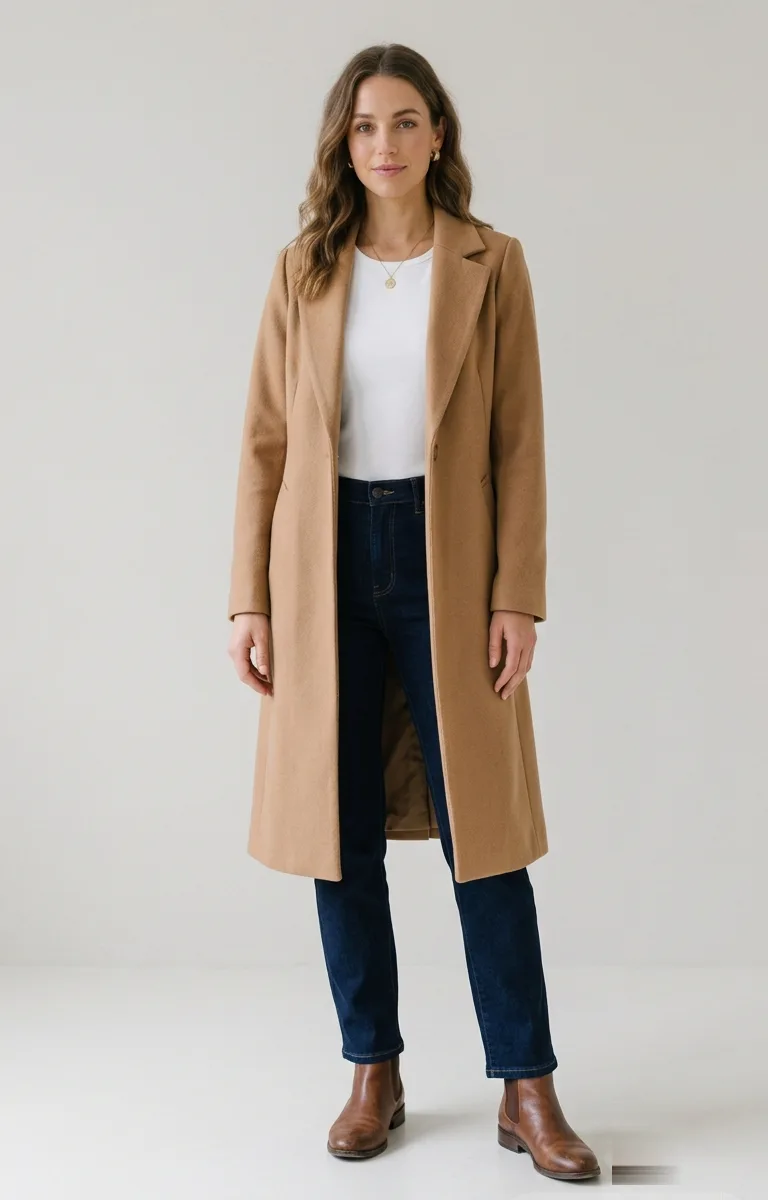
Shoes and bags matter too: a pointed toe and nude heels make legs look longer, and a crossbody strap at your slimmest point quietly flatters. The same idea applies to winter layers, where a longline coat lengthens and a cropped jacket over a fitted base defines the waist. Our capsule wardrobe guide has a starter list.
A real example, start to finish
Theory is easier to trust when you see it in action. Priya is closest to a pear shape and has an online order arriving with three dresses for a friend's evening dinner. Here is how she puts the guidance to work.
- She confirms her shape. A quick straight-on photo shows her hips are clearly wider than her shoulders, so pear it is.
- She sets one focal point. Since a pear looks balanced when the eye travels up, she decides the neckline and shoulders will carry the interest tonight.
- She picks the top half. She chooses the dress with a detailed boat neckline and a lighter bodice that draws attention up top.
- She simplifies the bottom half. That dress skims into a darker A-line skirt that floats over the hip instead of gripping it.
- She checks the fit, not the label. The waist seam sits at her natural waist and nothing pulls, so she ignores that it is a size up from her usual.
- She adds accessories with intent. Statement earrings lift the eye and nude heels lengthen her legs, both reinforcing the upward, balanced line.
The result is an outfit that looks deliberate rather than lucky. The two dresses that fought her proportions go back, and she keeps the one that works.
How to test what suits your body type
Reading about shapes only gets you so far, because the real test is seeing a cut on your body. That used to mean ordering several silhouettes and returning most of them.
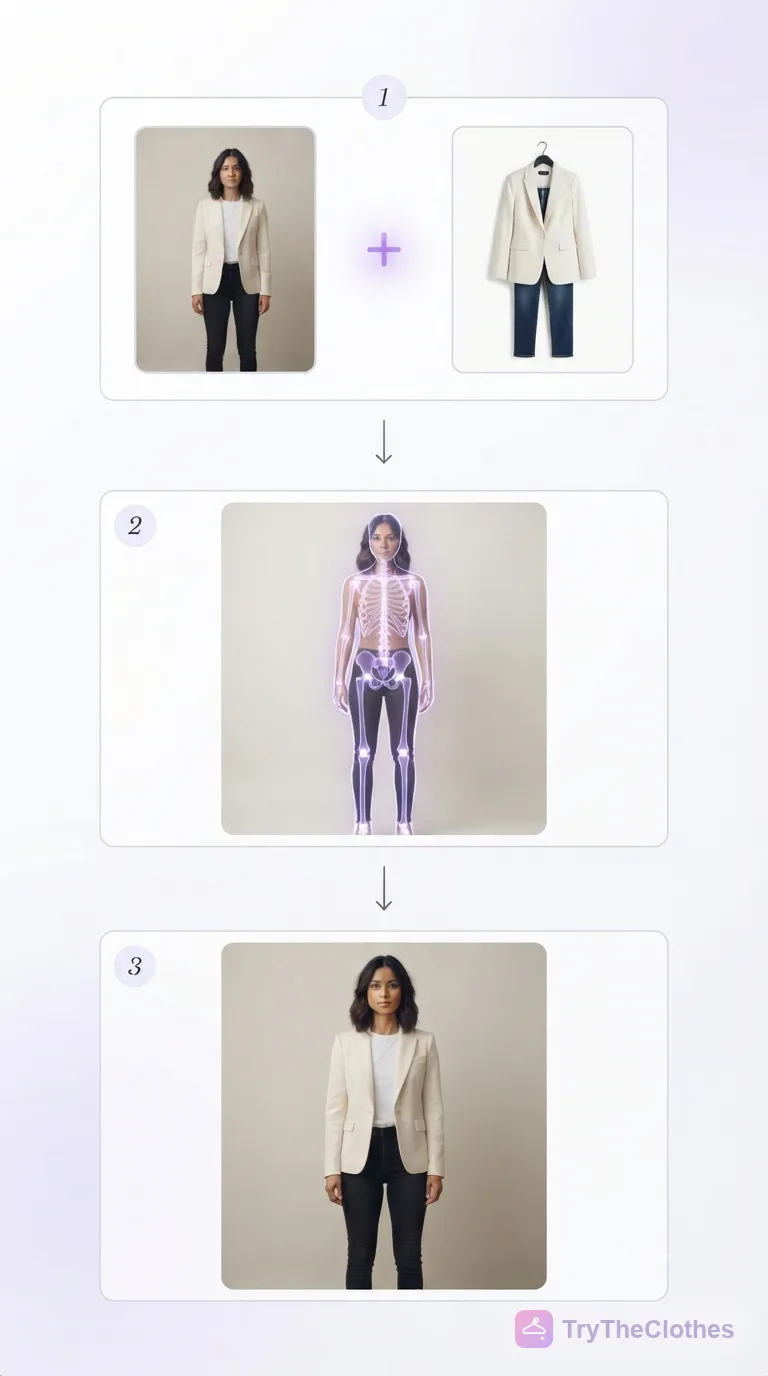
A faster way is to preview outfits on your own photo with an AI virtual try-on. Instead of guessing whether a wrap dress or a straight shift suits you, you can see both on yourself in seconds and keep the one that genuinely flatters. Browse ready-made outfits by category on our templates page to experiment across styles.


Frequently asked questions
What if I am a mix of two body types?
Most people are. Dress for whichever shape feels most dominant, and borrow tips from the second where they help. The universal principles above work across every blend.
Does knowing how to dress for your body type still matter if I am plus size or petite?
Yes, because proportion and balance apply at every size and height. Petite frames benefit especially from vertical lines and higher waistlines. For size-specific looks, see our plus size outfit ideas.
Can my body type change?
It can, with weight changes, age, fitness and life stages. Re-check your shape now and then so your wardrobe keeps working for the body you have today.
Do men need to dress for their body type too?
Absolutely. The same logic of balance and proportion applies. A broader upper body suits straight-cut trousers and darker tops, while a slimmer frame suits structured layers that add presence.
What is the fastest way to dress for your body type?
Two moves cover most of it: define your waist and balance your proportions from top to bottom. Master those and you can dress for your body type in seconds, whatever your shape, with no rulebook required.
The bottom line
Knowing how to dress for your body type is really about one thing: dressing the body you have, not the one on the model. Identify your shape, highlight what you love, balance your proportions, and prioritise fit over the number on the tag. Do that, and everything in your wardrobe starts working harder for you.
Start small. Pick one outfit you already own and adjust the fit, waist, or proportions using the tips above. Then, before your next online order, preview the look on yourself so you buy shapes that genuinely suit you. Confidence is the final layer, and it fits every body perfectly.
Ready to try it yourself? Upload a photo and see any outfit on you in seconds, and your first try-ons are free. Start a try-on →
One useful style tip a week
What to wear, how to size, and new try-on features. Short, useful, unsubscribe any time.