 By Dhruvisha J

Why your interview outfit matters
Deciding what to wear to a job interview is one of the few parts of the hiring process you have complete control over. You cannot control the questions, the mood of the panel, or whether the candidate before you happened to nail every answer. You can control the way you walk into the room. And research on first impressions is consistent on one uncomfortable point: people form a durable opinion of you within the first few seconds, long before you have said anything substantial about your skills.
That does not mean the interview is decided by clothes. It means your interview outfit either supports the story you want to tell or quietly works against it. When you are dressed appropriately, the interviewer stops thinking about your appearance and starts listening to your answers. When something is off, part of their attention leaks away toward the wrinkled collar or the scuffed shoe. Great interview clothing is almost invisible in the best way: it clears the stage so your competence can take the spotlight.
There is a second, quieter benefit. What you wear changes how you feel. Psychologists call it enclothed cognition, the idea that clothing carries symbolic meaning that affects the wearer's own mindset. Put on something that fits well and suits the occasion, and you tend to sit straighter, speak more slowly, and project more calm. The outfit is not just a message to the interviewer; it is a message to yourself that you are ready.
The two jobs an interview outfit has to do
- Signal respect. Showing up dressed for the occasion tells the employer you take the opportunity seriously and understand professional norms.
- Signal fit. Beyond respect, your clothes hint that you already belong in their environment. A candidate who looks like they could start tomorrow is easier to picture on the team.
Keep both jobs in mind as you plan, and every decision that follows, color, formality, accessories, gets easier to make. You are not chasing the trendiest look. You are assembling the outfit that lets a stranger trust you fastest.
What to wear to a job interview: the golden rule
If you remember nothing else from this guide, remember this: match the company, then dress one notch above. Your goal is to look like a slightly more polished version of the people who already work there. Not a stranger from another industry, and not someone in costume, but a natural fit who made an effort.
The reason the rule works is that dress codes are cultural signals. Every workplace has an unwritten standard, from a bank where suits are the baseline to a design studio where dark jeans and thoughtful sneakers are the norm. When you calibrate your interview outfit to their standard and then add one notch of polish, you demonstrate two things at once: you understand their culture, and you respect the interview enough to elevate.
What "one notch up" actually looks like
- If the team wears jeans and t-shirts, you wear clean dark jeans or chinos with a collared shirt or a smart knit.
- If the team wears business casual, you add a blazer, or swap a polo for a crisp button-down.
- If the team wears suits, you wear a well-pressed suit in a conservative color and make sure every detail is sharp.
The mistake people fear most is being overdressed, but in practice, moderate overdressing is rarely held against a candidate. Showing up in a suit to a casual startup might feel slightly stiff, yet it still reads as "this person cares." Showing up underdressed sends the opposite message and is much harder to recover from. When in genuine doubt about what to wear to a job interview, lean a little more formal.
Why one notch, not three
There is a ceiling to the rule, and it matters. Overshooting by a single level reads as effort. Overshooting by three levels, a tuxedo-adjacent look at a t-shirt company, can read as misjudging the culture, which is exactly the impression you are trying to avoid. The elegance of "one notch up" is that it keeps you recognizably one of them while still visibly elevated.
How to research the company dress code
You do not have to guess what to wear to a job interview. The information is usually a few clicks away, and doing this homework is itself a sign of a thoughtful candidate. Spend fifteen minutes before you plan your outfit and you will remove almost all the anxiety.
Where to look
- The company's own channels. Team pages, an "about us" section, recruiting videos, and social media posts show real employees in their real clothes. This is your most reliable source.
- Employee profiles. A quick scan of how staff present themselves professionally online tells you whether the culture skews formal, polished-casual, or relaxed.
- The industry norm. Finance, law, and government trend formal. Marketing, media, and hospitality trend business casual. Tech, design, and early-stage startups trend casual. Use the industry as your starting assumption, then adjust with what you actually see.
- Just ask. It is completely acceptable to email your recruiter or coordinator and say, "I want to be respectful of your dress code, could you tell me how people typically dress?" Recruiters answer this all the time and will think more of you for asking.
Translating what you find into a plan
Once you know the baseline, decide your notch-up move and build a single, complete outfit, including shoes and accessories, the day before. If you understand the difference between formal, business casual, and casual, you can dress correctly for almost any employer. The next section breaks those categories into concrete outfits.
When the signals conflict
Sometimes the website looks corporate but the team photos look relaxed, or the office is casual but the role is client-facing. When signals conflict, weight two things most heavily: the seniority of the role and how customer-facing it is. A leadership or client-facing position almost always calls for a step up in formality, even at a casual company, because you are being pictured representing the brand to outsiders.
What to wear to a job interview by workplace
The single biggest variable in choosing what to wear to a job interview is the workplace itself. A courtroom and a game studio have opposite expectations, and both are "correct" in context. Use the table below as a fast reference, then read the notes underneath for the reasoning.
| Workplace type | Dress code baseline | Interview outfit (one notch up) | Footwear |
|---|---|---|---|
| Corporate / finance / law | Business formal | Tailored suit, conservative colors, ironed shirt | Polished closed-toe leather shoes |
| Corporate general / consulting | Business professional | Suit or blazer with dress trousers, tie optional | Leather dress shoes or clean loafers |
| Business casual office | Business casual | Blazer over a button-down, chinos or tailored trousers | Loafers, brogues, or clean minimal flats |
| Creative agency / media | Smart casual | Well-fitted knit or shirt, structured jacket, dark denim | Clean leather sneakers or ankle boots |
| Startup / tech | Casual | Collared shirt or smart knit, dark jeans or chinos | Minimal clean sneakers or loafers |
| Retail / hospitality / customer-facing | Neat casual to business casual | Polished, approachable, on-brand outfit | Comfortable clean closed shoes |
Corporate and formal environments
In banking, law, accounting, consulting, and most large corporations, the safest answer to what to wear to a job interview is a suit. Choose navy, charcoal, or gray, keep the shirt crisp and white or light blue, and make sure the tailoring is clean through the shoulders. Formal environments read details closely, so a pressed shirt and shined shoes matter as much as the suit itself.
Business casual environments
Business casual is the most common office standard and, honestly, the most confusing, because it lives between formal and relaxed. A reliable interview formula is tailored trousers or chinos, a collared shirt, and a blazer you can keep on or remove depending on the room. You do not need a tie. You do need everything to fit and look intentional.
Creative, startup, and tech environments
Creative studios, agencies, and technology companies often prize personality and taste over formality, but "casual" is not a license to look careless. The goal is elevated casual: dark denim or chinos, a well-cut shirt or fine-gauge knit, and maybe a structured jacket. Clean, minimal sneakers are usually fine here, and a touch of considered personal style is a plus rather than a risk.
Customer-facing and hospitality roles
Retail, hospitality, and other customer-facing roles have their own logic: you are auditioning to represent the brand to the public, so approachability matters as much as polish. Dress neatly, lean toward the brand's own aesthetic, and prioritize a warm, put-together look over a stiff formal one. If the store or venue has a recognizable style, echoing it lightly shows you understand the customer you would be serving.
Women's interview outfit ideas
Women often have more range in interview clothing, which is both freeing and slightly harder to navigate. The organizing principle stays the same: match the company and elevate. Below are outfit templates you can adapt to any dress code.
For formal and corporate interviews
- A tailored trouser suit or skirt suit in navy, charcoal, or black.
- A pantsuit with a simple silk or cotton blouse underneath.
- A sheath dress in a solid, muted color worn with a structured blazer.
- Closed-toe heels or polished flats, kept to a comfortable, walkable height.
For business casual interviews
- Tailored trousers or a midi skirt with a tucked-in blouse.
- A blazer layered over a simple knit or shirt.
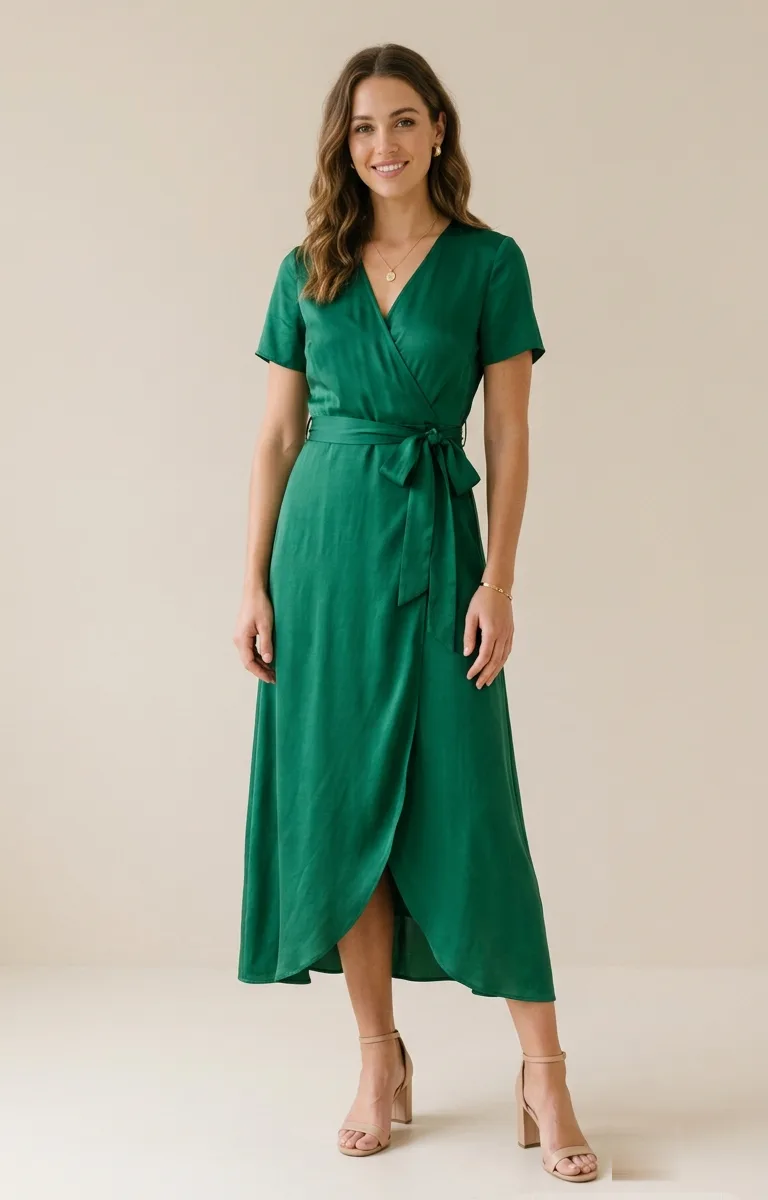
- A knee-length or midi dress with a cardigan or jacket.
- Loafers, low block heels, or clean flats.
For creative and casual interviews
Here you can show more of your personal style while keeping it polished. A well-fitted knit, tailored dark denim, and a statement-but-tasteful jacket work beautifully. One considered accessory, a good bag, a simple necklace, or a bold flat, adds personality without becoming a distraction. If you love a crisp classic, learning how to style a white shirt gives you an interview-ready base you can dress up or down in seconds.
A note on comfort
Whatever you choose, rehearse it. Sit down, cross your legs, reach for a bag, walk a corridor. If a skirt rides up when you sit or a heel wobbles on hard floors, you will spend the interview managing your clothes instead of the conversation. Comfort is not the opposite of professional; it is part of it.
Men's interview outfit ideas
For men, deciding what to wear to a job interview usually comes down to a few reliable building blocks, arranged to match the company's formality. Fit is the difference between looking sharp and looking like you borrowed the clothes, so prioritize tailoring over labels.
For formal and corporate interviews
- A single-breasted suit in navy or charcoal that fits cleanly at the shoulders.
- A crisp white or light-blue shirt, pressed, with no gaping at the buttons.
- A simple tie in a solid or subtle pattern; skip loud novelty prints.
- Polished leather Oxfords or Derbies with matching belt and dark socks.
For business casual interviews
- Tailored chinos or wool trousers in navy, gray, or stone.
- A button-down shirt, optionally under a blazer or unstructured jacket.
- A fine-gauge knit as an alternative to the shirt-and-blazer combination.
- Loafers or brogues, clean and cared for.
For creative and casual interviews
You can relax the formality without abandoning polish. Dark, well-fitted jeans or chinos, a quality shirt or knit, and clean minimal sneakers strike the right note in most startups and studios. A textured overshirt or a slim unstructured jacket adds intention. The trick is that "casual" clothes have to be in noticeably good condition, because there is no tie or suit to carry the outfit for you.
The build-once interview uniform
If interviews stress you out, take the decision off the table entirely by building one reliable interview uniform you trust. A navy blazer, a white or light-blue shirt, gray tailored trousers, and clean leather shoes cover the vast majority of interviews with only tiny adjustments. Owning a proven combination means that on interview morning you are not styling, you are just getting dressed.
Fit, grooming and the small details
Two candidates can wear the same outfit and land completely differently, and the reason is almost always fit and grooming. These are the multipliers that make an ordinary interview outfit look expensive and an expensive one look sloppy.
Fit is everything
- Shoulders first. On a jacket, the shoulder seam should sit where your shoulder ends. This is the hardest thing to alter, so buy for the shoulders and tailor the rest.
- Sleeve and trouser length. Shirt cuffs should reach the base of your thumb; trousers should break lightly at the shoe, not pool around the ankle.
- Nothing straining. No pulling across buttons, no gaping, no tightness when you sit. If it strains, size up and tailor down.
Grooming and finishing touches
- Clean, styled hair and neat nails. These read as attention to detail.
- Fragrance kept minimal or skipped entirely; interview rooms are small and some people are sensitive.
- Shoes cleaned and, if leather, polished. Interviewers genuinely notice footwear.
- A steamer or iron pass on the whole outfit. Wrinkles undo good tailoring instantly.
Accessories, kept deliberate
Accessories should support the outfit, not compete with it. A clean watch, a simple bag or portfolio, and at most one or two considered pieces of jewelry are plenty. The test is simple: if an accessory is the first thing someone notices, it is doing too much for an interview.
What to avoid: distractions that cost you the job
Knowing what to wear to a job interview also means knowing what to leave in the closet. Most interview wardrobe mistakes are not about being unfashionable; they are about creating small distractions that pull attention away from your answers. Remove the distractions and your competence gets a clean runway.
Common mistakes to skip
- Anything ill-fitting. Too tight or too baggy both undercut a professional impression.
- Loud logos and slogans. Save the statement pieces for after you have the offer.
- Overpowering fragrance. A memorable scent for the wrong reason is a real risk in close quarters.
- Wrinkled or stained fabric. It reads as carelessness even when it was just a rushed morning.
- Distracting extremes. Very high heels you cannot walk in, jangling jewelry, or anything you will fidget with.
- Brand-new, unbroken-in shoes. Blisters make you visibly uncomfortable; do a test walk first.
The "look down, look in a mirror" check
Before you leave, do a full head-to-toe pass in a mirror, then sit down and look at what happens to the outfit. A surprising number of problems, a gaping shirt, a too-short sock, a hem that rides up, only appear when you sit. Catching them at home costs nothing; catching them in the interview costs your focus.
What to wear to a job interview over video
Video interviews follow the same principles with a few camera-specific adjustments. The temptation is to dress up top and stay casual below, but resist it. Dressing fully helps you feel in-role, and you never know when you will need to stand up to grab a document.
Dress the whole outfit, not just the top half
Wear a complete outfit exactly as you would in person. Beyond avoiding the standing-up disaster, dressing fully changes your posture and mindset in ways the camera picks up. If you work remotely and want a wardrobe that carries you from calls to interviews, our guide to work-from-home outfit ideas pairs perfectly with this section.
Camera-friendly choices
- Solid, mid-tone colors read best on camera. Deep blue, teal, forest green, and warm neutrals flatter most skin tones.
- Avoid tight patterns like narrow stripes or small checks, which can shimmer and distort on video.
- Skip pure white and pure black as head-to-toe choices; cameras struggle with both extremes.
- Mind your background. Your outfit should not blend into the wall, and clutter behind you competes for attention.
Test before the call
Turn your camera on ahead of time and check how your outfit, lighting, and background look together. Adjust the light so your face is clearly lit, and confirm your top does not disappear against your setting. Two minutes of testing prevents the most common video-interview wardrobe surprises.
Plan and preview your outfit with virtual try-on
The final source of interview-day anxiety is simple uncertainty: you have picked the pieces, but you cannot quite tell how the whole outfit will look on you until you are already wearing it and running late. This is exactly the problem an AI virtual try-on solves. Instead of imagining the combination, you can see it on your own photo before you commit.
How to use try-on to plan an interview outfit
- Preview complete outfits. Combine a blazer, shirt, and trousers virtually so you judge the whole look, not isolated pieces.
- Compare options side by side. Not sure between the navy blazer and the gray one, or heels versus flats? See both and decide with your eyes, not your memory.
- Check color and fit direction. Confirm a shade suits you and a silhouette flatters before you buy or borrow.
- Build a repeatable formula. Once you find an interview outfit that works, save it as your go-to for future rounds.
Start from a template
If you are not sure where to begin, browse our templates for polished, interview-appropriate looks you can adapt to any dress code. Starting from a proven combination removes the blank-page problem and lets you focus on small personal adjustments instead of building an outfit from scratch. And the same tool that helps you nail an interview outfit is just as useful for other big days, from a first day on the job to what to wear to a summer wedding.
Frequently asked questions
What should I wear to a job interview if I don't know the dress code?
When you genuinely cannot find the dress code, default to business casual and lean slightly formal: tailored trousers or a skirt, a collared shirt or simple blouse, and a blazer you can keep on or remove to read the room. This middle-ground outfit works almost everywhere and is easy to dress up or down. You can also email the recruiter and ask directly, which is always acceptable and reflects well on you.
Is it bad to be overdressed for an interview?
Being slightly overdressed is rarely a real problem, because it still signals that you take the opportunity seriously. Underdressing is the riskier mistake and much harder to recover from. If you must choose between the two, err on the more formal side, and if the environment turns out to be very casual, you can remove a layer like a blazer or tie to relax the look on the spot.
Do I need to buy a whole new outfit for a job interview?
No. Most people can assemble a strong interview outfit from clothes they already own, focused on fit and grooming rather than new purchases. Make sure your best pieces are clean, pressed, and well-fitted, and invest in tailoring or a good pair of shoes before a whole new wardrobe. Previewing combinations with an AI virtual try-on also helps you get more mileage from what you already have.
What colors are best for an interview outfit?
Neutral, muted colors, navy, charcoal, gray, stone, and white, are the safest and most versatile foundation, and they photograph well for video interviews too. They read as calm and professional and let your personality, not your palette, lead the conversation. You can add a single considered accent through an accessory or a shirt, but keep the overall scheme restrained for a formal setting.
The bottom line
Choosing what to wear to a job interview is not about fashion or expense; it is about clearing the runway so the interviewer focuses on you. Match the company's dress code, dress one notch above it, and make sure everything fits, is clean, and is comfortable enough to forget about once you sit down. Do that, and your clothes quietly do their job, signaling respect and fit while your answers carry the conversation.
The good news is that this is the most controllable part of the whole process. A little research, a well-planned interview outfit, and a quick preview with virtual try-on remove almost all the day-of anxiety and let you walk in feeling like the person for the role. Get the outfit right the night before, and on the morning of the interview you get to think about nothing but doing your best.
Ready to try it yourself? Upload a photo and see any outfit on you in seconds, and your first try-ons are free. Start a try-on →
One useful style tip a week
What to wear, how to size, and new try-on features. Short, useful, unsubscribe any time.
Some links on this page are affiliate links. We may earn a commission when you buy through them, at no extra cost to you. Learn more.